In short
- After you win a vehicle, collection depends on release, paperwork, condition and access — in that order.
- Send the operator the site, lot or registration, condition as listed, release reference and delivery address.
- Non-runners are normal in auction work and are loaded by winch — but the operator must know the true condition in advance.
- Check your collection window; sites may charge storage if a vehicle is left too long.
- Collections are arranged subject to the site's release requirements and opening arrangements.
1. What happens after you win a vehicle
Winning the auction is only the first step. Before any truck can collect, four things have to line up. First, the vehicle must be paid for and released under the site's rules — requirements vary by site, so follow the instructions in your buyer documents. Second, there is usually a collection window, and vehicles left beyond it can attract storage charges. Third, the site needs to be able to identify the vehicle and the collector, which is where your lot number, registration and any release reference come in. Fourth, somebody has to physically load a vehicle that may not have moved in months. A good collection is arranged around all four, not just the drive.
2. What the operator needs from you
- The site — which auction or salvage site, and where.
- The vehicle — lot number or registration, make and model.
- Condition as listed — starts or not, rolls or not, steers or not, keys present or not, and the damage described in the listing.
- Release details — any release reference, and anything the site has told you about collection.
- The deadline — the last day for collection before storage charges apply.
- The destination — where the vehicle is going, and who will receive it.
With those six things, our auction collection service can give you a price and a plan in one conversation.
3. Condition: the detail that decides the job
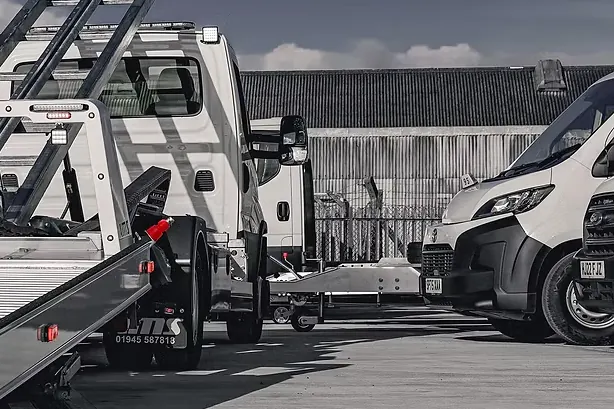
Auction vehicles range from tidy runners to accident-damaged non-runners, and the listing description is the operator's only picture of what is waiting. A runner can be driven onto a tilt-and-slide bed. A non-runner is pulled on with a 10,000 lb hydraulic winch. A vehicle with locked steering, missing wheels or heavy damage can usually still be moved — but it needs a different loading plan and more time. The single most helpful thing a buyer can do is pass on the listing's condition honestly, including the unflattering parts. Understating damage does not make loading easier; it just makes it slower.
4. Collection day, step by step
- The collection is booked against the site's opening and release arrangements.
- The operator checks in at the site with the vehicle and release details you provided.
- The vehicle is located and checked against the listing — condition, wheels, steering and keys.
- It is loaded — driven on if it runs, winched on if it does not — and secured with D-ring lashings and wheel chocks.
- It is transported under cover of goods in transit and on-hook insurance.
- It is delivered and unloaded at your address, yard, workshop or storage, as agreed.
5. What affects the cost of an auction collection?
- Distance — site to destination, and the truck's full round trip.
- Vehicle size and condition — a runner is quicker to load than a damaged non-runner that will not steer.
- Site time — locating, checking and loading a vehicle in a busy salvage yard takes longer than a straightforward handover.
- Timing and deadlines — collections that must happen on a specific day, or at short notice.
- Access at the destination — unloading a non-runner somewhere tight needs planning.
As always, agree the full price upfront, with no hidden charges, before the truck sets off.
6. Mistakes buyers make (and how to avoid them)
- Assuming it runs because it looks complete. Read the listing's condition and keys information, and pass it on word for word.
- Booking transport before release is sorted. If the site cannot release the vehicle, the trip is wasted. Confirm release first.
- Leaving it to the last day of the window. Deadlines plus one problem — paperwork, access, condition — quickly become storage charges.
- Forgetting the destination. A non-runner still has to be unloaded somewhere it can safely sit. Decide where before collection day.
- Sending a registration but no lot number (or the reverse). Send both; yards work with both.
7. Questions to ask any collection operator
- Have you collected from this site before, and what do you need from me?
- Can you load a non-runner that does not steer?
- Is the price the full price, agreed upfront?
- Is the vehicle insured on your truck?
- What happens if the vehicle is worse than the listing described?
Common questions
Which auction and salvage sites do you collect from?
Sites across the UK, including Copart and BCA. Send us the site, the lot or registration details and the delivery address when you ask for a price.
Can you collect a non-runner or accident-damaged vehicle?
Yes — that is a large part of auction work. Tell us exactly what the listing says about condition: whether it starts, rolls and steers, and whether keys are present.
What do you need from me to arrange collection?
The site and its location, lot number or registration, make and model, the condition as listed, any release reference, the collection deadline and the delivery address.
Do I need to attend the site myself?
Usually the handover can be arranged without you being there, subject to the site's release requirements. Check what your site needs and confirm the arrangements with us before the collection day.
What if the vehicle is worse than described?
Tell us straight away. A vehicle that does not roll or steer can usually still be loaded by winch, but it may change the loading plan — the sooner the operator knows, the better.
Is the vehicle insured once it is on the truck?
Yes. Every load SK Recovery carries is covered by goods in transit and on-hook insurance until it is unloaded at your destination.
Bought a vehicle that needs collecting?
Send us the site, lot details, condition and delivery address for a price — call 07944 597463 or request a quote. Moving machinery instead? See our plant transport guide.